Editor Position: Journal of the Royal Musical Association
The Royal Musical Association invites applications for the post of a second Editor of the Journal of the Royal Musical Association, to begin in May 2026, or as soon as possible thereafter. This post has become available since Dr Hettie Malcomson is stepping down because of a change of circumstance. The postholder will work alongside Prof. Deborah Mawer, lead Editor, to contribute to the production and development of our thriving flagship journal.
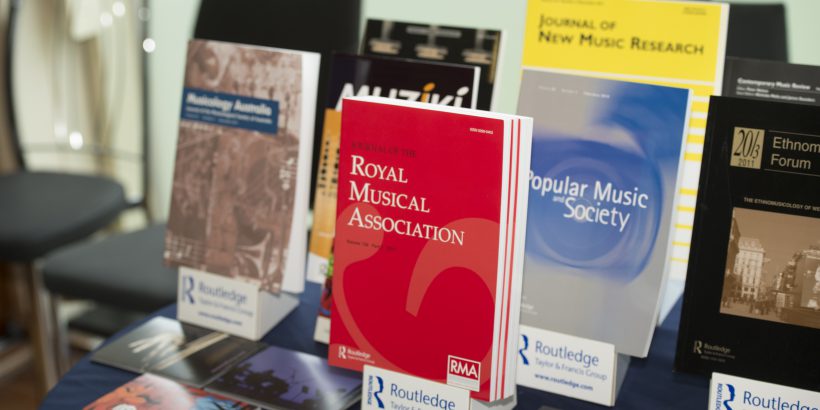
The Journal of the Royal Musical Association (JRMA) is one of the major international refereed journals in the discipline. Founded 150 years ago (as the Association’s Proceedings) to advance ‘the art and science of music’, JRMA maintains a wide-ranging, inclusive interpretation of music studies that encompasses historical, cultural and critical musicology; theory and analysis; ethnomusicology; gender and sexuality; popular music and jazz studies; pedagogy; audiovisual media and practice-led research. Its editorial policy is to disseminate outstanding work across the evolving discipline, to communicate specialist perspectives to a broad readership, and to prompt new scholarly debate. Research articles published in JRMA have undergone rigorous double-anonymous peer review after initial screening by the Editors for quality and fit with the journal’s objectives. Further information about the aims and scope of the journal are available from the RMA website and the JRMA pages of the Cambridge University Press website.
Job Description
The Editor shares responsibility with the lead Editor for selecting and preparing for publication academic content of the highest quality for the journal: they are the key figures in the publication process. Between them, the Editors organise anonymous peer review, as well as seeking, commissioning, and developing articles and other features for the journal, maintaining the highest quality in both content and form. They ensure accepted articles and features are delivered to the Publisher in good order and to agreed deadlines, working in collaboration with the Reviews Editor and the Production Team at CUP.
The successful candidate may be expected to:
- Undertake initial evaluation of submissions to assess their appropriateness for the journal.
- Ensure that appropriate external readers are found for submissions and that the anonymous review process proceeds as smoothly as possible.
- Communicate feedback to authors clearly and in a timely manner, so as to ensure submissions progress efficiently through the evaluation and revision process.
- Undertake editing of accepted articles, working constructively with authors and the journal’s production team to produce finished content of the highest quality.
- Contribute to the development of additional alternative-format submissions for online-only publication.
- Encourage submissions from scholars at all stages of their careers, including by attending appropriate national and international conferences to promote the journal to prospective authors.
- Attend RMA Publications Committee meetings three times each year (currently January, May and September), working with the lead Editor to produce progress reports in advance as appropriate.
The Editor reports to and is a member of the Editorial Board of JRMA, and of the Publications Committee of the RMA, and is entitled to attend meetings of the RMA Council. The Editor is expected to be a member of the RMA during their tenure (though not necessarily at the time of application).
The Editorship is normally a five-year appointment in the first instance, the first year of which is probationary. The post attracts an honorarium of £3,265 p.a.
Person Specification
The Editor will be able to demonstrate the following essential knowledge, skills, experience and qualifications:
- A higher degree in musicology
- An appreciable and on-going record of publications in musicology
- Experience of editing of academic content
- A knowledge of musicology and related disciplines and subdisciplines
- Knowledge and awareness of the wider academic community
The Editor should demonstrate vision, leadership, creativity, sound planning skills (including a keen eye for emerging directions in musicological scholarship), strong management skills (liaising with authors and the production team, robust quality assurance in relation to manuscripts, and the production of each issue), along with good communication skills.
Informal enquiries should be directed to the lead Editor of JRMA, Prof. Deborah Mawer (deborah.mawer@bcu.ac.uk).
Applications should be sent by email to Chair of the Search Committee, Prof. Caroline Rae (rae@cardiff.ac.uk) marked Application for Editor JRMA, and should comprise the following:
- A curriculum vitae (maximum 4 sides A4)
- A covering letter outlining details of the candidate’s relevant experience and expertise in relation to the person specification, and their visions for the journal’s development
- Names and contact details of two referees
The deadline for applications is 12 noon on Monday 30 March. Interviews will be held online in late April (date tbc).
We particularly encourage applications that reflect the full diversity of music studies and from individuals who self-identify as members of groups that are often under-represented in the RMA and music academia more broadly.