Study Day Report – Music as Life Practice: Methods and Modalities for Experimental Music
By Bea Hebron
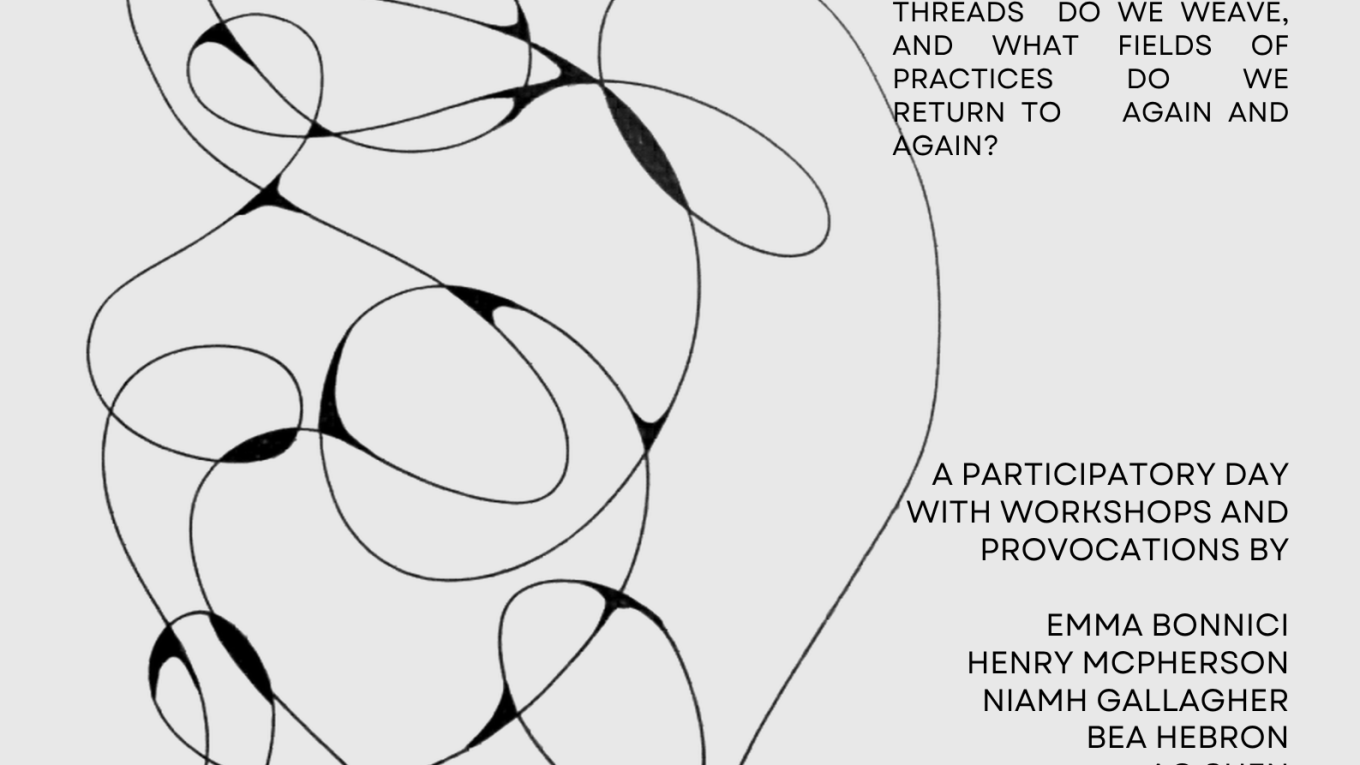
Hosted by City St George’s, University of London, on the 18th of June 2026, this RMA Study Day offered ‘Music as Life Practice’ as a thematic anchor to invite practitioners and researchers across different music communities and genres to explore the contours of a widening understanding of experimental music practices and ground these firmly within lived experiences. Music here was framed a taking place, as a gathering together of the threads of life, with the everyday forming a significant site of experimental practice.
Unlike a classic conference format, this day focused primarily on participatory activities with workshops and provocations by Emma Bonnici, Henry Mcpherson (University of Manchester), Niamh Gallagher (Goldsmiths, University of London), Bea Hebron (City St George’s, University of London), and Ao Shen (Goldsmiths, University of London). This was a deliberate response to an ongoing discourse and desire within Practice Research communities to carve out opportunities to music together, to explore those material realities and the conversations that arise from it. Get in a room together and do.
The day started with provocation by Emma, detailing her work on the body as an expression of biography, her experiences with vocal ensembles, physical tuning and embodiment, as well as the impacts of creative facilitation. She sang part of her provocation, communicating so clearly through her music, and concluded with a singing exercise for the whole group. What was particularly striking was Emma’s emphasis on process and honesty, showing her thinking in progress, and therefore extending permission to openly experiment with the ‘fragile edge’ of finding and articulating new insights around musical practices.
Henry then spoke about his resonant work in ecopedagogical scoring before turning it into a workshop in text score composition. Sharing and reflecting on the scores made by the group highlighted themes such as site specificity, physicality, co-existence, and sonic imagination. Building on Henry’s emphasis on text scores, Niamh’s and Bea’s workshop focused on musical improvisation. Turning the whole group into an ensemble, this workshop instantiated Bea’s score ‘Please Joyn,’ which was adapted for this occasion in collaboration with Niamh, to include her ‘body first’ methodologies. Branching out from Bea’s song ‘Happier Today’ a rich 30-minute performance emerged, which explored themes of invitation, delight, and comfort. Emma’s workshop picked up on the now established sense of collective sound making and deepened the discussion around embodiment, introducing somatic exercises before exploring vocal archetypes and their placements in the body. Ao’s workshop ‘Open Score’ concluded the day, honing in on collaboration and ensemble specificity. Every participant wrote a text score for the group, we decided on an order of performance, and then instantiated them all in quick succession, reflecting on adaptability, trust, and iteration.
Overall, Music as Life Practice exposed a deep sense of collaboration, common questions, and shared embodied knowledges. Creative techniques strongly overlap across different practices – from improvisation, composition, listening, singing, and playing, to even textile making. Musicality and experimentation remain fields of practices we return to again and again.
Bio:
Bea Hebron is a singer-songwriter, composer, producer, writer, and researcher. She is in the final stages of her PhD, supervised by Mira Benjamin and Claudia Molitor. Her musical practice embraces both experimental and popular music traditions, working at the intersection of songwriting and verbal scoring. Her focus rests on process, reciprocities, unfinishedness, and embodied knowledges, inviting and playing with tendrils of transdisciplinarity. Bea has a background in film, curation, production, and comparative literature; and her work deliberately welcomes contamination.